In the evolving landscape of clean energy, renewable power systems have become increasingly sophisticated and integral to global energy strategies. Solar farms, wind turbines, battery energy storage systems (BESS), and power converters are no longer niche technologies — they are mainstream infrastructure supporting grid reliability, resiliency, and sustainability. With this rise comes a need for advanced testing and validation methodologies to ensure performance, safety, and efficiency under real-world conditions. One of the most important tools in this domain is the high-power DC electronic load.
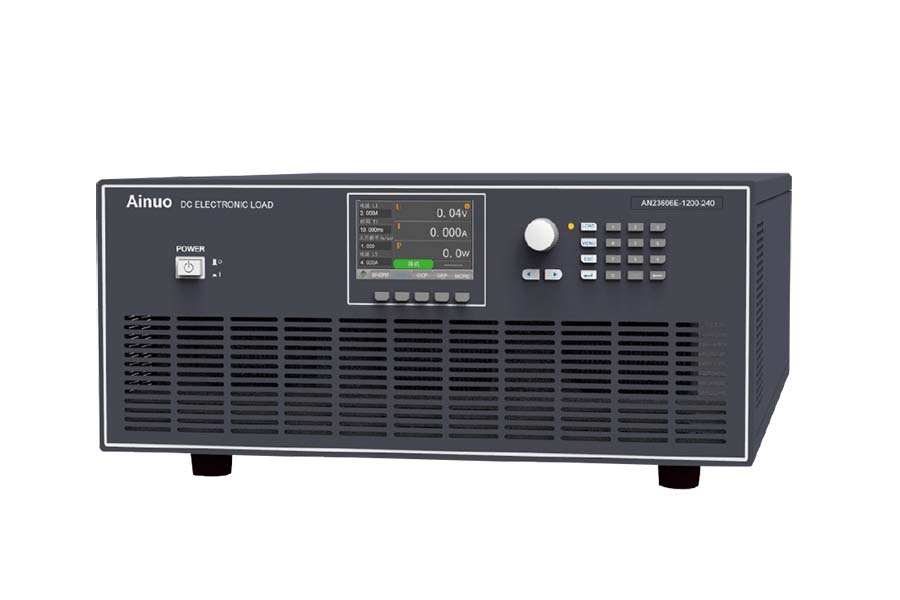
DC electronic loads are programmable instruments that simulate electrical loads by drawing current from a power source under defined conditions. When designed for high power (kilowatts to megawatts), these devices become invaluable for testing large-scale renewable systems that would otherwise be difficult or hazardous to evaluate under real operational stresses. This blog post examines the key applications of high-power DC electronic loads in renewable energy systems, highlighting their importance for testing, optimization, and lifecycle validation.
1. Testing Photovoltaic (PV) Inverters and Power Converters
Modern photovoltaic systems rely on power converters — primarily DC-to-AC inverters — to transform solar panel output into usable grid electricity. Ensuring these converters operate efficiently, reliably, and safely is critical before deployment in the field.
Role of High-Power DC Electronic Loads
Simulating Array Outputs: Solar arrays produce variable DC voltages/currents depending on irradiance and temperature. High-power DC electronic loads can mimic these characteristics, enabling engineers to simulate real PV panel conditions in a controlled environment.
Performance Characterization: By precisely controlling load current/voltage, engineers can test inverter performance across its full operating range, evaluating metrics such as conversion efficiency, Maximum Power Point Tracking (MPPT) behavior, and dynamic response.
Stress Testing: Electronic loads can subject systems to rapid load changes, imitating sudden cloud cover or shading events. These stress tests reveal vulnerabilities in control logic, thermal management, and protective mechanisms.
Benefits
Eliminates the need for actual solar panels during testing.
Accelerates development cycles.
Improves quality assurance and reliability.
2. Verifying Battery Energy Storage Systems (BESS)
Battery storage is one of the most dynamic and rapidly expanding segments in renewable energy. Whether paired with solar/wind farms or used independently for peak shaving, grid services, or microgrids, BESS units must perform reliably under complex load demands.
How High-Power DC Loads Help
Charge/Discharge Emulation: Electronic loads act as controlled discharging devices, enabling safe and repeatable discharge testing of high-capacity batteries.
State-of-Health (SOH) Analysis: Regular testing with electronic loads allows engineers to track capacity fade, internal resistance changes, and thermal behavior over time.
High-C-Rate Testing: Some applications, such as electric vehicles or grid stabilization, require batteries to deliver or absorb power quickly. High-power DC loads can simulate these aggressive discharge profiles to validate the BESS design.
Key Use Cases in BESS
Endurance Testing: Repeated charge/discharge cycles to assess longevity.
Safety Testing: Evaluating response under fault conditions (e.g., overcurrent, overtemperature).
System Integration: Verifying how BESS interacts with inverters, charge controllers, and grid interfaces under various load patterns.

3. Evaluating Wind Power Control Systems
While wind turbines generate variable AC power, the internal control systems often involve DC bus components for pitch control, yaw motors, and power electronics. High-power DC loads are instrumental for validating these subsystems.
Applications in Wind Energy
Converter Verification: Power electronics in wind turbines (e.g., rectifiers, DC bus stabilizers) can be tested using DC loads to simulate real generator output.
Control Logic Testing: Evaluating how control algorithms respond to transient conditions, such as sudden wind gusts or grid disturbances.
Component Qualification: DC loads help test and qualify high-power rectifiers, filters, and energy storage elements within the turbine.
Why It Matters
Wind turbines are complex electromechanical systems with high variability. Accurate testing with programmable loads ensures that turbine subsystems can tolerate wide fluctuations without compromising longevity or safety.
4. Grid-Tied Power Electronics and Converter Validation
Renewable systems rarely operate in isolation. They must synchronize with utility grids, handle bidirectional power flows, and comply with strict grid codes.
High-Power DC Loads in Grid Testing
Microgrid Testing: Simulating distributed generation scenarios where multiple sources (solar, wind, storage) interact.
Grid Code Compliance: Verifying that power converters can ride through faults, inject reactive power, and maintain stability under mandated operational conditions.
Dynamic Response Analysis: Assessing fast transient behavior during grid events, such as frequency fluctuations or voltage sags.
Advantages
This approach enables utilities and manufacturers to validate control strategies, protective schemes, and power quality behavior before deployment, reducing risk and improving compliance with regulatory requirements.
5. Supporting Electric Vehicle (EV) Charging and Infrastructure Development
Renewable sources are increasingly coupled with electric vehicle charging infrastructures to reduce carbon emissions and improve energy efficiency. High-power DC electronic loads are central to testing high-capacity DC fast chargers and related systems.
Testing Scenarios
DC Fast Charger Validation: Electronic loads simulate EV battery profiles to test charger behavior under various states of charge and load currents.
Power Rating Confirmation: Ensuring chargers can deliver rated power (e.g., 150 kW, 350 kW) safely and within design tolerances.
Protection and Safety Evaluation: Triggering protective responses such as overcurrent/overvoltage shutdowns.
Benefits for the EV Ecosystem
Faster development cycles for chargers.
Better reliability and safety validation.
Improved interoperability between vehicles and infrastructure.
6. Supporting Research, Development & Innovation in Renewable Technologies
Beyond direct testing needs in commercial products, high-power DC electronic loads are indispensable tools for academic and industrial research.
R&D Use Cases
Novel Energy Conversion Architectures: Exploring hybrid systems (e.g., solar + supercapacitor + battery) under controlled load conditions.
New Materials and Devices: Evaluating next-generation semiconductors (SiC, GaN) in power converters.
Optimizing Algorithmic Control: Fine-tuning MPPT strategies, adaptive controls, and predictive maintenance models.
Why Programmability Matters
High-power DC loads allow for precise replication of realistic stress patterns, complex load profiles, and environmental variations — all of which are essential for advanced research. Researchers can push systems to limits that would be costly or unsafe in real hardware tests.
7. Ensuring Reliability Through Lifecycle Testing
Renewable energy systems often have expected lifespans of 20+ years. Hardware must be validated not just for performance, but for durability across environmental cycles and load patterns.
Lifecycle Testing with DC Loads
Accelerated Aging: Repeated load cycles simulate years of operation within weeks or months.
Thermal Cycling: Electronic loads help stress thermal management systems to uncover latent failures.
Fault Simulation: Testing protective elements under load faults such as short circuits, overcurrent, and sudden disconnections.
Outcome
Lifecycle testing helps manufacturers understand failure modes, refine designs, and offer stronger warranties — all contributing to improved system availability and lower lifecycle costs.
8. Enhancing Safety and Protection Verification
Safety is paramount in high-power renewable installations, which operate at high voltages and currents. Testing existing safety systems under controlled yet strenuous conditions is critical to prevent field failures.
Role of Electronic Loads
Triggering Safety Mechanisms: Deliberately inducing overcurrent, overvoltage, and surge conditions.
Validating Redundancy: Ensuring that backup protection systems activate correctly.
Thermal and Electrical Stress Testing: Exposing systems to peak loads to witness real protective responses.
Real-World Impact
This proactive testing helps reduce field incidents, enhances compliance with standards (e.g., IEC, UL), and builds trust with stakeholders from utilities to end customers.
9. Benchmarking and Competitive Evaluation
In a crowded renewable technology market, benchmarking products against competitors is essential. High-power DC electronic loads provide a benchmarking platform that is unbiased and repeatable.
Benchmarking Activities
Efficiency Comparison: Between inverters or power converters at different load points.
Response Time Evaluation: Time taken to recover from transients or grid disturbances.
Load Handling Capacity: Measuring actual behavior under extreme but realistic load scenarios.
Why It Matters to Manufacturers
Objective data from controlled testing environments enhances product positioning, informs marketing claims, and supports certification efforts.
10. Supporting Field Diagnostics and Maintenance
Even after deployment, high-power DC electronic loads can play a role in field service and maintenance.
Field Use Cases
On-Site Fault Diagnosis: Verifying suspected failures without dismantling major system components.
Performance Validation After Repairs: Confirming that replaced modules meet performance expectations.
Routine Maintenance Testing: Checking health metrics periodically to prevent unplanned downtime.
Benefits
Field-deployable DC loads (modular or transportable) help technicians simulate loads safely and verify system health without requiring full operational conditions.
Conclusion
High-power DC electronic loads are no longer niche laboratory tools — they are essential enablers of robust, reliable, and efficient renewable energy systems. From development and validation to maintenance and benchmarking, these instruments play a key role in ensuring that renewable technologies perform as expected, whether in a laboratory setting or out in the field supporting critical infrastructure.
As renewable adoption accelerates and systems become more complex, the ability to simulate real-world electrical stresses safely and accurately will continue to grow in importance. High-power DC electronic loads deliver that capability — offering repeatability, programmability, and precision that traditional testing methods simply cannot match.
Whether you are an engineer designing the next generation of solar inverters, a researcher exploring hybrid energy systems, or a technician maintaining a grid-scale battery array, high-power DC electronic loads are indispensable tools in your renewable energy toolkit.